If you run machines anywhere in WA, attachment hire is often the quiet difference between a smooth program and a blown‑out schedule.
Why Attachment Hire Beats Owning
Owning attachments ties up capital in buckets, grabs and hammers that might sit in a laydown yard between projects. Hiring lets contractors expense costs per project instead of carrying the full purchase price on their books, which helps cash flow and simplifies job costing.
Because hire fleets are constantly refreshed and inspected, you get compliant, well‑maintained attachments without wearing the risk of age‑related failures. Members of the Hire & Rental Industry Association (HRIA) build their businesses around safety, training and risk management, so you benefit from industry standards that are tough to match with a small in‑house fleet.
On fast‑moving jobs across WA, flexibility is everything. Attachment hire lets you scale up for a surge in work, trial specialist gear like rock breakers or hydraulic grabs on a single project, or cover a short‑term machine swap without committing to a permanent change in your fleet.
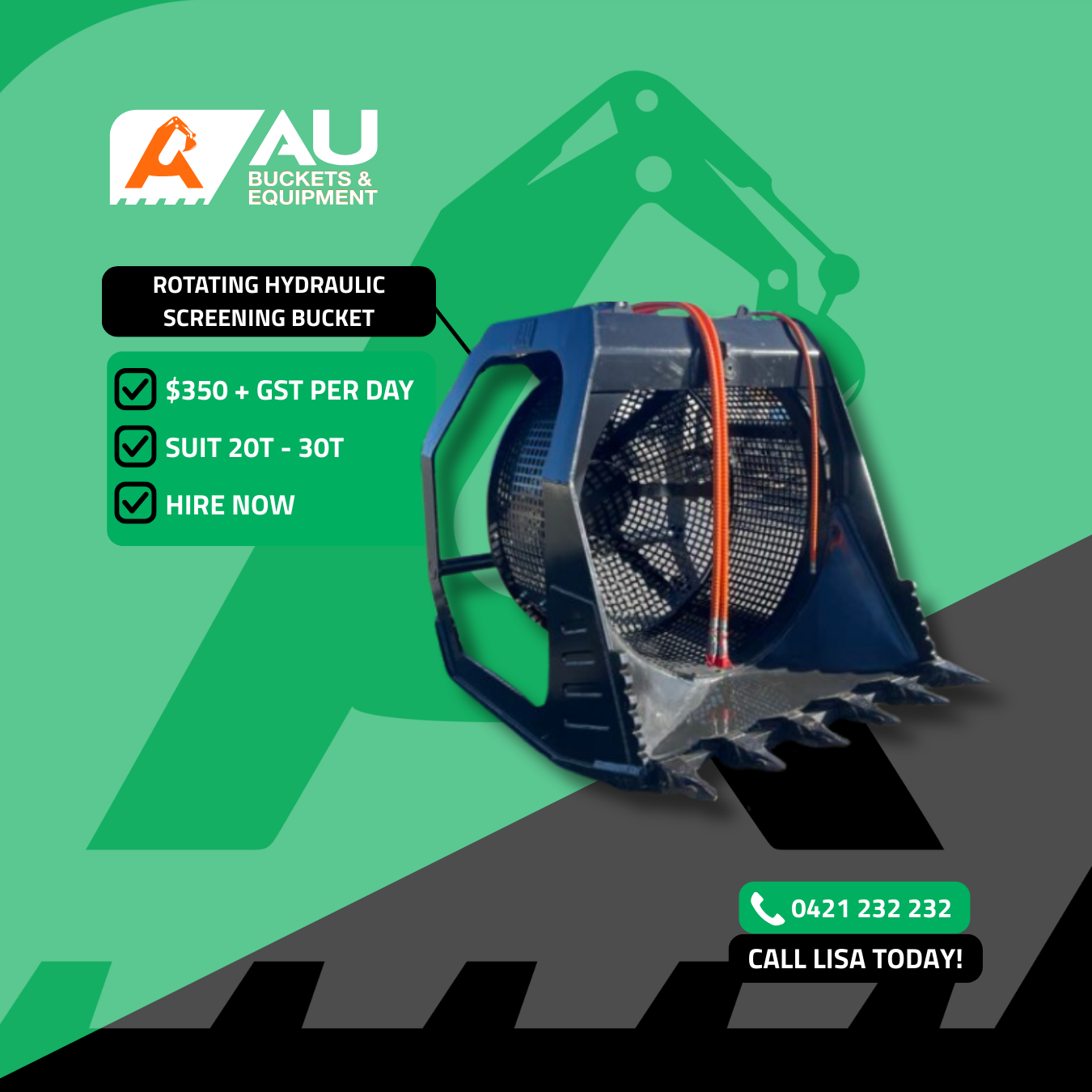
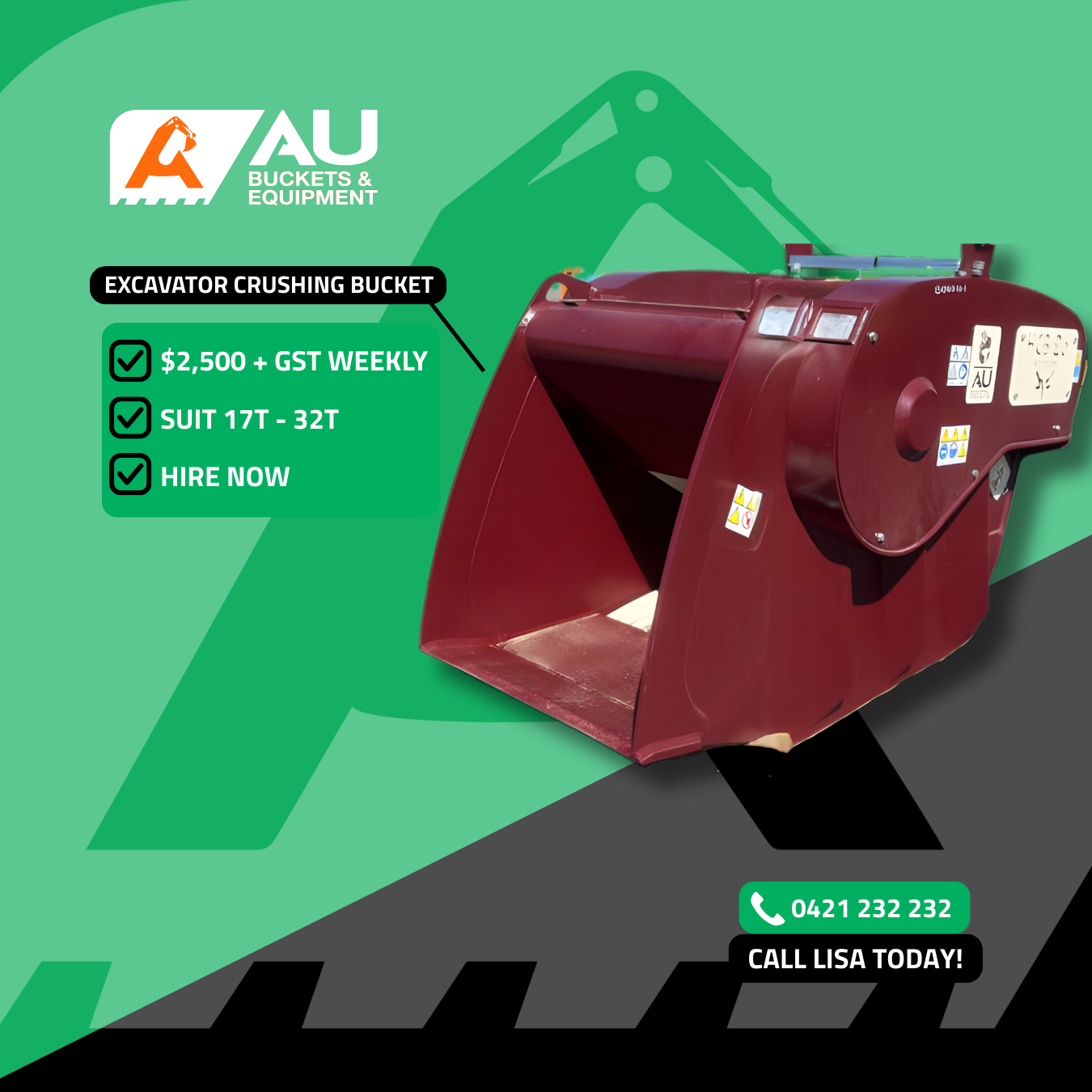
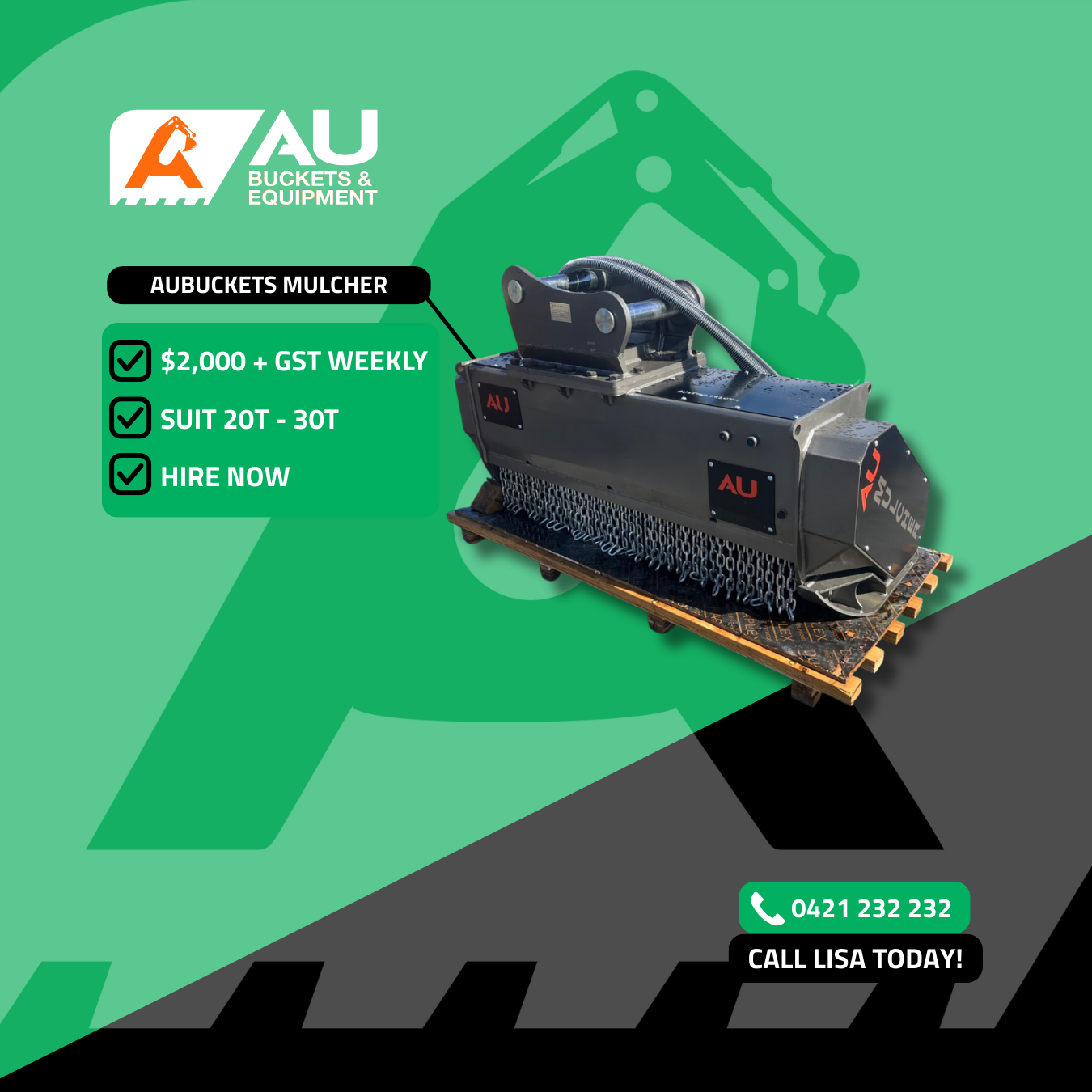
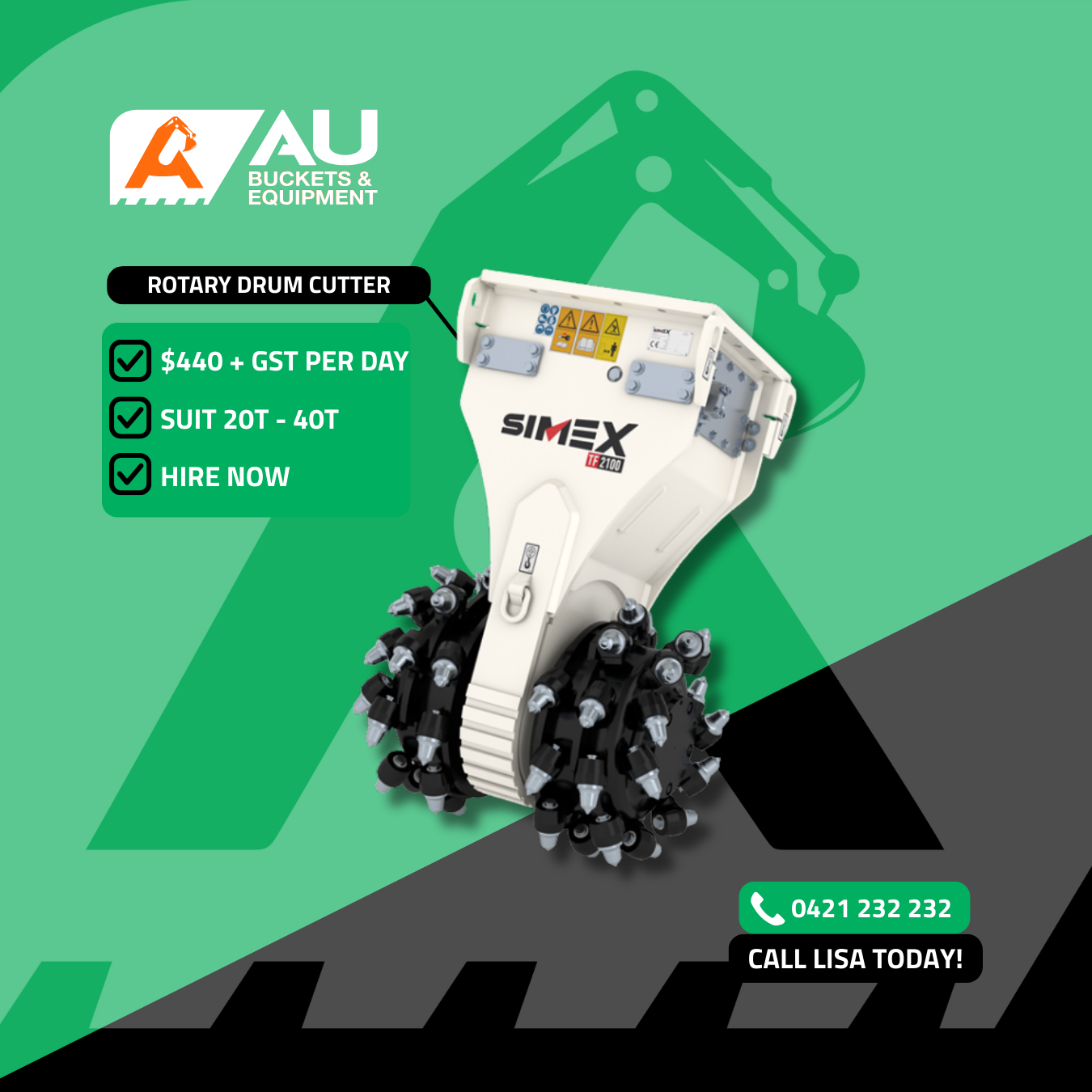
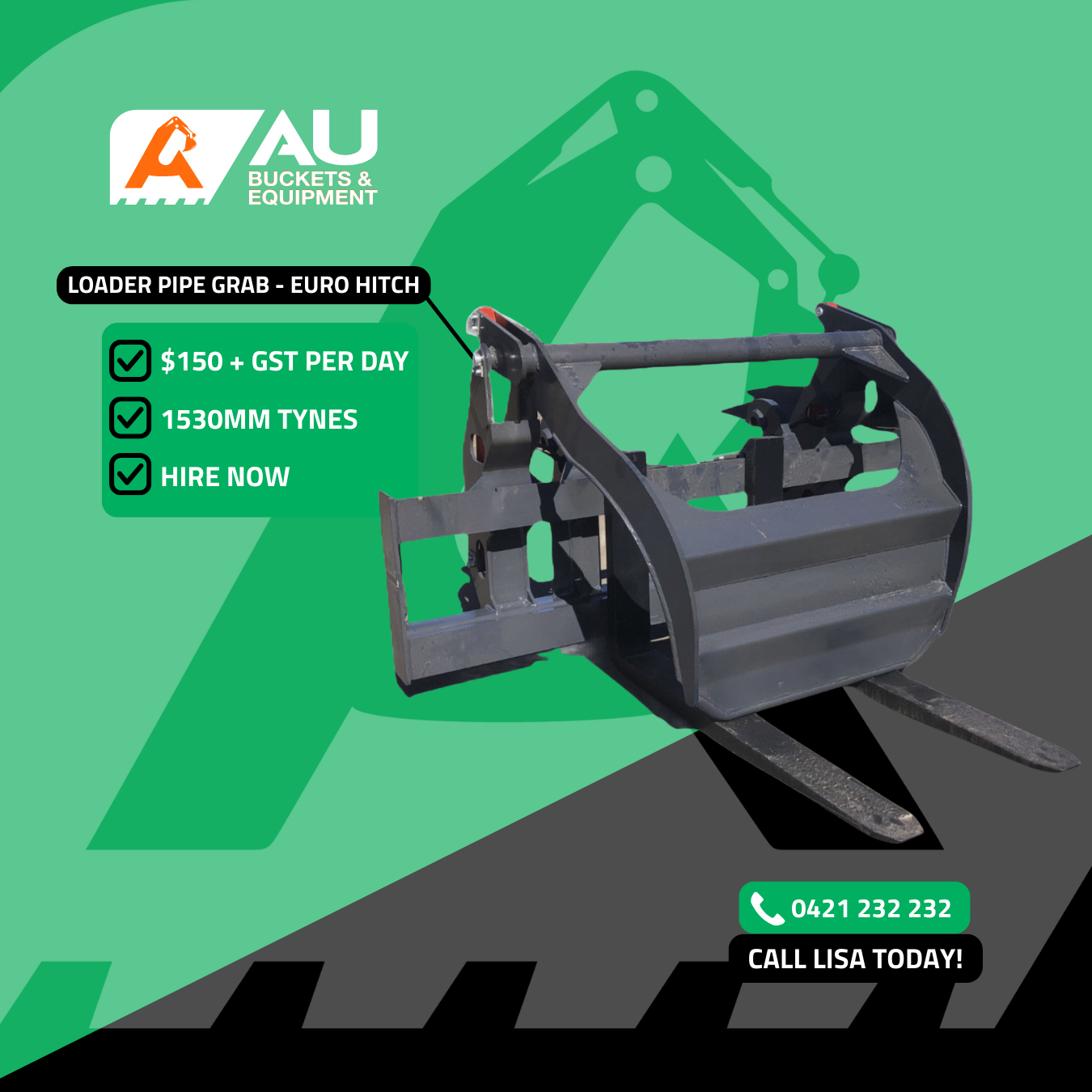
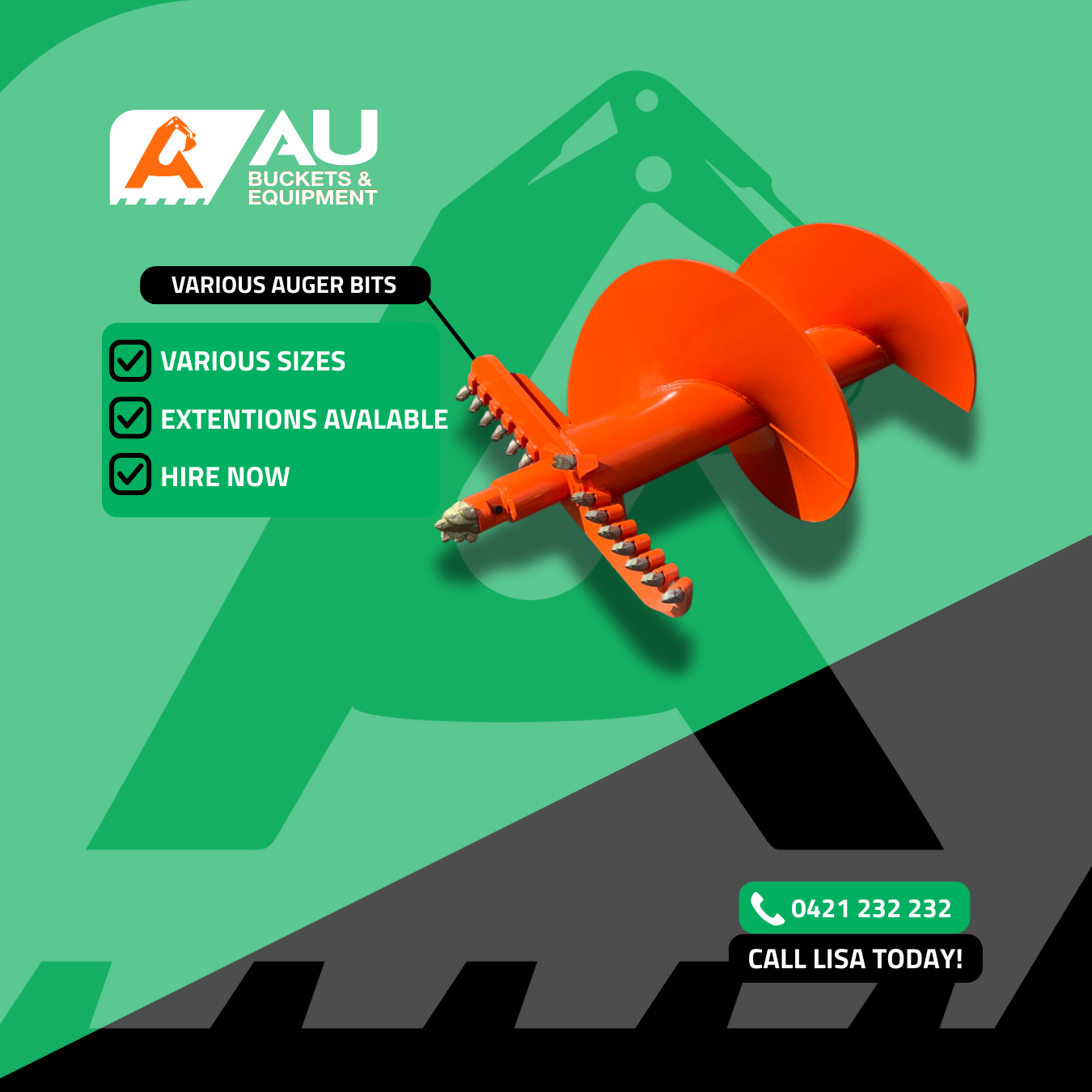
A Day in the Life of the AU Buckets Hire Yard
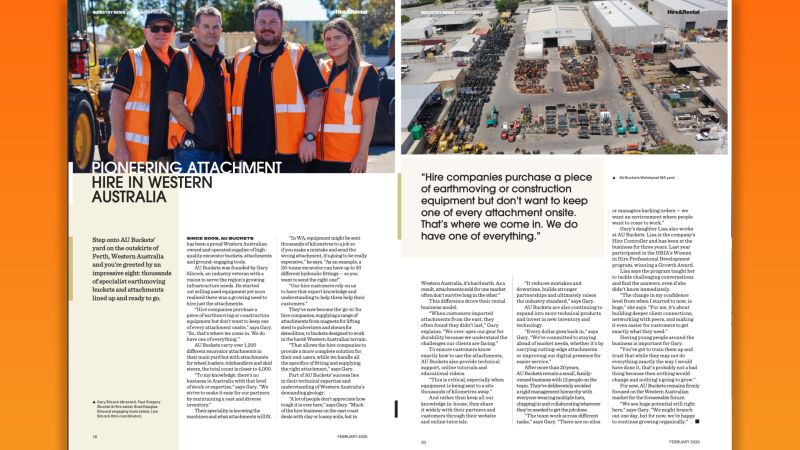
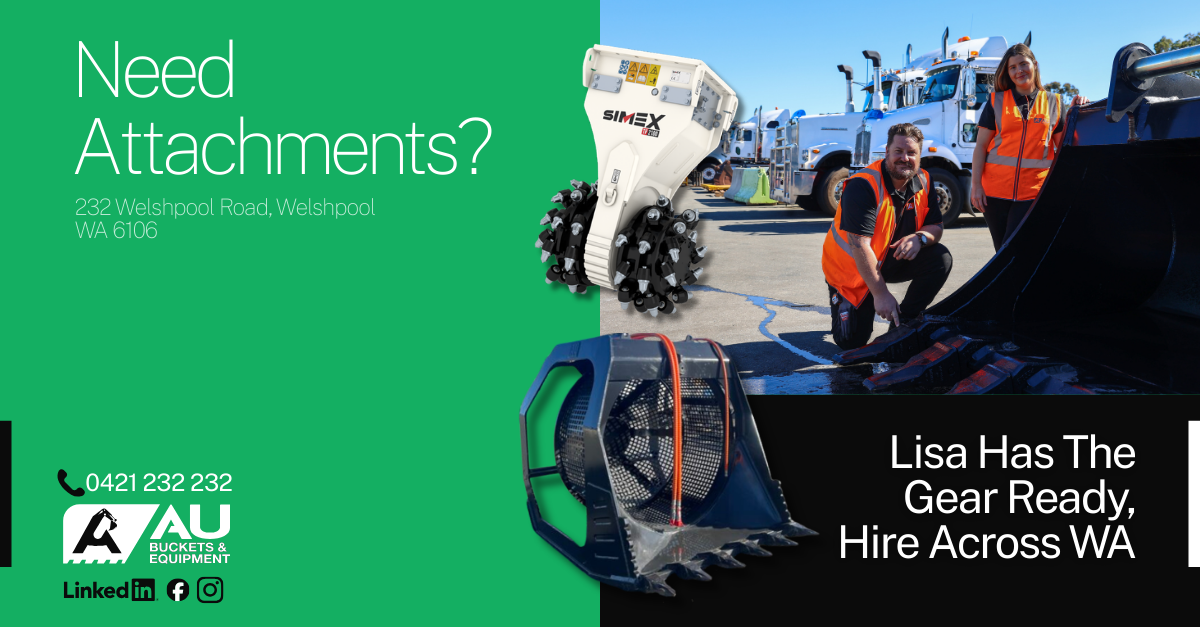
Walk into AU Buckets’ Welshpool yard on a weekday morning and you are stepping into a live logistics hub built around one goal: getting the right gear to the right site on time. Over 1,200 buckets and attachments move through this yard, supporting civil, mining and construction projects across more than 20 industries Australia‑wide.
Each hire job starts in dispatch, where the team checks the booking against the machine and job details on file. The selected attachment heads to a fitter for inspection and servicing, checking cutting edges, wear parts and pins, topping up hydraulic oil where required, and confirming that all safety decals and documentation are in place.
Before anything leaves Welshpool, it goes through pre‑delivery checks: matching tags and pin measurements to the hire sheet, confirming the transport plan, and making sure chains, lifting points and racks are ready for safe loading. From there, logistics coordinate trucks heading in multiple directions, metro civil jobs today, Pilbara and Goldfields freight tomorrow, so every bucket, grab or hammer arrives when the site needs it.
How We Match Attachments to Machines and Ground
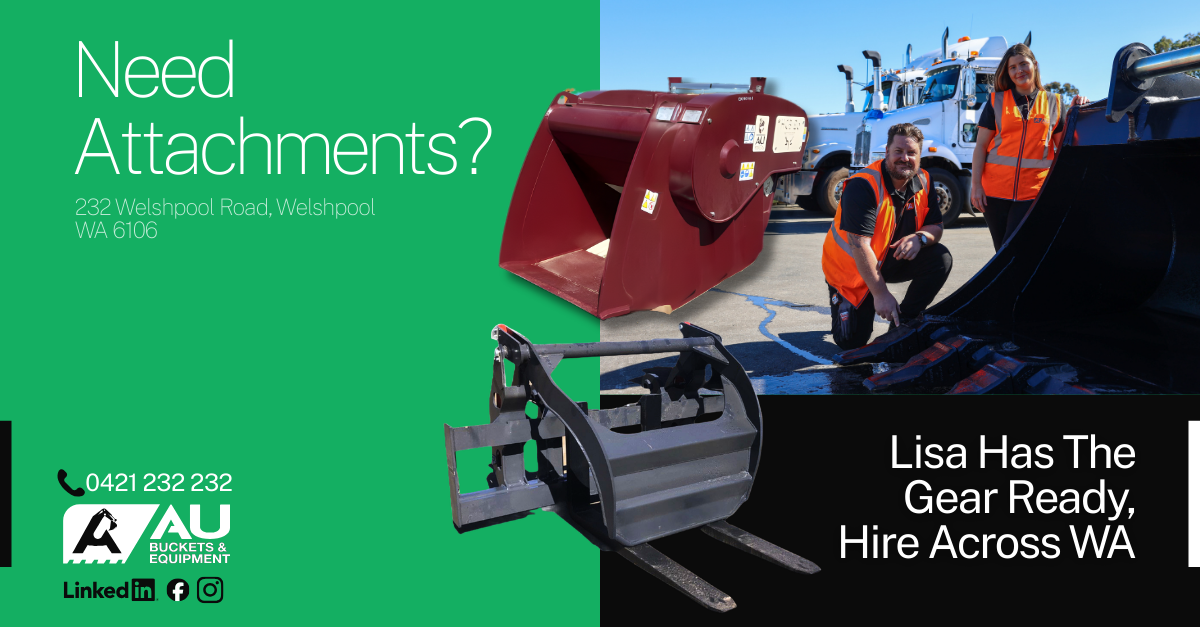
The real value of a specialist attachment yard shows up in the pairing work Lisa and the hire team do before anything is loaded. Every conversation starts with the machine: make, model, operating weight and pin dimensions, plus whether the excavator uses a quick hitch or direct mount.
Next comes the job itself. Digging services in a sandy Perth subdivision needs a different setup to bulk rock in the Pilbara or sticky material in the Goldfields. The team factors in ground conditions, material type, depth, reach, and whether you are trenching, battering, breaking or sorting to recommend specific buckets, rippers, grabs or rock breakers.
Getting this match wrong costs time and money, an under‑spec bucket slows every pass, the wrong grab drops productivity, and a mis‑matched breaker can damage both attachment and machine. By drawing on a large, purpose‑built hire fleet and years of field experience, AU Buckets’ crew help you avoid that hidden downtime and keep your utilisation where it should be.
What Good Hire Etiquette Looks Like
Contractors who consistently get the best value from attachment hire tend to follow a few simple habits. It starts with the brief: when you first contact the yard, share clear machine details, pin sizes, hitch type, job location and timeframes, along with a short description of the work and the material you will be in.
Photos help a lot. A quick set of images showing the machine’s hitch, current bucket ears and any site‑specific constraints will often save a trip or a re‑delivery. Common mistakes to avoid include guessing pin centres, under‑estimating material hardness, and forgetting to flag access issues that could affect truck size or delivery timing.
When the attachment arrives, a quick site‑level inspection pays off. Check pins and retainers, hoses and couplers, safety decals and any supplied paperwork before you sign off. Treat the gear like your own, avoid using buckets to push or lift beyond rating, keep hammers within recommended duty cycles, and report any issues early, and you will minimise damage charges and keep the relationship running smoothly on both sides.
The Team Behind the Gear
Behind every bucket, grab and hammer that leaves the Welshpool yard is a crew of dispatch coordinators, fitters, logistics planners and admin staff who live and breathe the hire industry. AU Buckets has operated since 2005, and its team supports hundreds of companies nationally, from small civil contractors through to major mining and government clients.
Dispatch and admin field the calls, build the bookings and keep hire paperwork aligned with HRIA‑backed standards around safety and compliance. Fitters and workshop staff handle inspections, servicing and wear‑part changes, making sure every attachment is ready to go back to work. Logistics then work with trusted freight partners to get gear to site across Perth, regional WA and interstate.
This commitment to people and process is one reason AU Buckets has been recognised in HRIA industry channels, highlighting its role in keeping construction, civil and earthmoving projects moving across Australia. When you ring the yard about an excavator attachment hire in WA, you are tapping into that experience – not just a static rack of iron.
When to Move from Hire to Buy
Hire is designed to give you flexibility, but there comes a point where owning specific attachments makes better commercial sense. As a rule of thumb, when a particular size of bucket, hammer or grab is booked out on your machines for most weeks of the year across multiple projects, it is time to look at utilisation more closely.
If you are regularly extending hire terms, running the same attachment on long‑duration contracts, or building a pipeline of similar work, the total hire cost may start to approach (or exceed) a well‑negotiated purchase price. In that case, talking to specialists like Paul or Gary about buying – potentially alongside “while it’s off the machine” wear‑parts and G.E.T. options, can lower your long‑term cost per hour while keeping hire in play for peak periods or specialist jobs.
On the other hand, if your work mix changes often, you move between machine sizes, or you only need certain tools a few times a year, sticking with hire will usually protect your cash flow and keep your fleet lean. Many contractors run a hybrid model: own a core set of high‑utilisation attachments, and lean on AU Buckets’ attachment hire in Perth and across WA for everything else.
Bringing It All Together for Your Next Project
Whether you are chasing bucket and grab hire from Welshpool for a metro civil job, or lining up excavator attachment hire in WA’s mining and regional hubs, the way your hire partner operates behind the scenes matters as much as the steel itself. By choosing an HRIA‑aligned, attachment‑focused yard like AU Buckets, and by following good hire etiquette on your side, you give every project a better chance of running on time, on budget and safely.